Rewriting the Human Story?
“Most of us can't rush around, talking to everyone, know all the cities of the world. We haven't time, money or that many friends.
The things you're looking for, Montag, are in the world, but the only way the average chap will ever see ninety-nine per cent of them is in a book.”
— Ray Bradbury, Fahrenheit 451
Those of you who know my personal story will know I’m a film girl first, lawyer second. So when I watched Fahrenheit 451 as a teenager, it wasn’t because the book had been required reading for school. It was because I wanted to see Truffaut’s first film in colour, and his only one in English.
A bit ironic, perhaps, that the medium of cinema was what introduced me to Ray Bradbury’s imagined dystopian future of a world with no books. But I digress...
Last week I had the privilege of speaking to two dozen film & TV producers for a ScreenSkills training session. It was a great conversation focused on the EU AI Act's transparency obligations (more about that below) and the key things to be aware of in AI software terms and conditions.
But after closing out of Zoom, I couldn’t stop thinking about Project Panama: Anthropic’s reported initiative to buy up and scan millions of physical books, ostensibly to gather training data for Claude.
According to court filings, Project Panama involved AI company Anthropic buying millions of physical books, cutting off their spines, scanning the pages, creating digital copies, and then disposing of the physical remains. If reports are to be believed, the books – many of them vintage or otherwise rare – were acquired, dismantled, digitised, and then fed into an algorithm designed to reproduce language at scale.
Sometimes without meaning. Almost always without context.
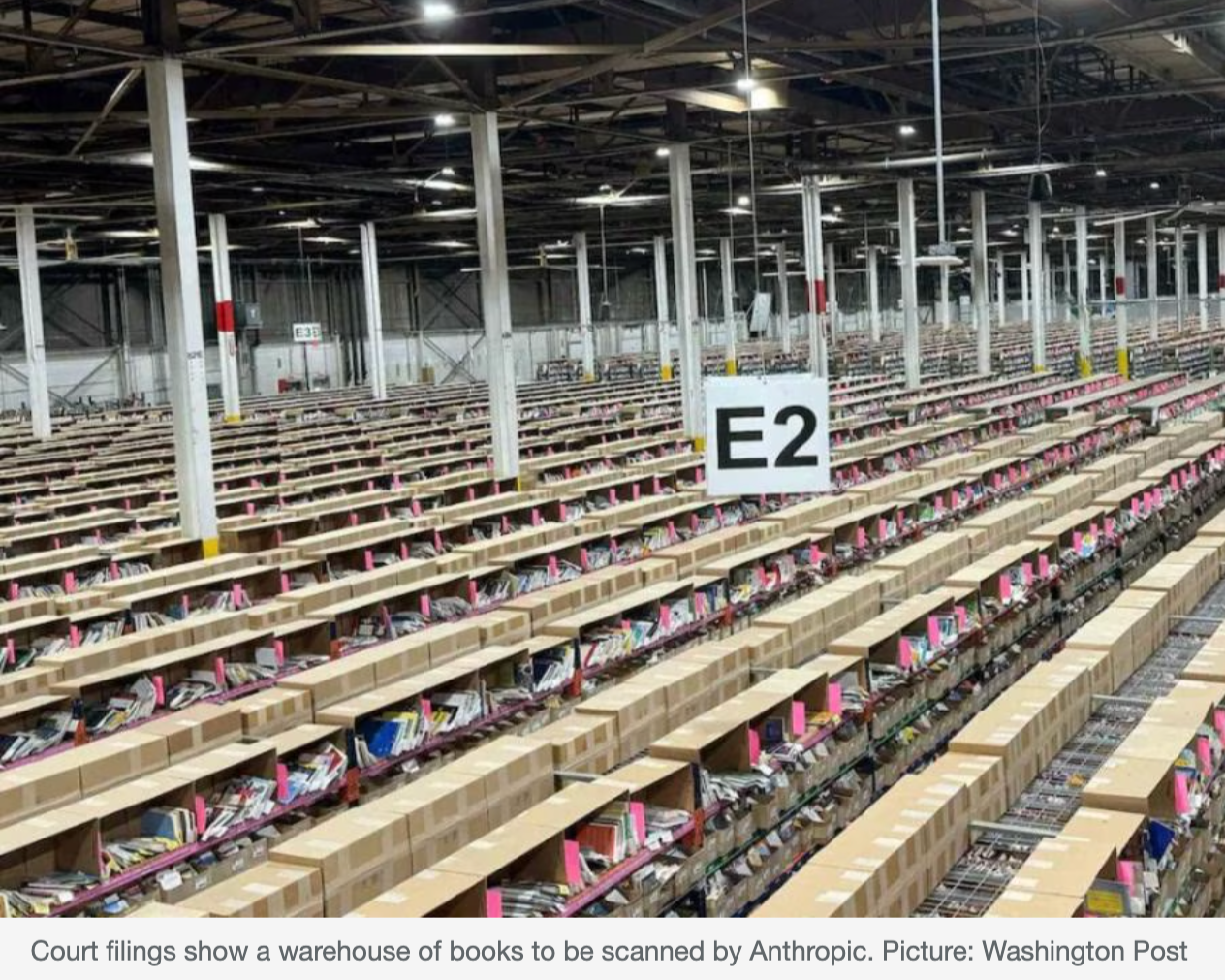
Project Panama is the codename for Anthropic’s alleged initiative to buy millions of physical books, use a hydraulic powered cutting machine to chop off the spines, scan the loose pages with industrial-grade imaging equipment, and then destroy the original copies.
Of course, books have always travelled beyond their authors. They are bought, sold, lent, lost, annotated, stolen, remaindered, translated, misread, loved, adapted, and yes – at times, even banned or burned.
But this feels different. Because I think we're really talking about human imagination and intellect being stripped for parts.
I love my job because I believe helping performers, writers, and other creative types understand the implications of artificial intelligence is essential for society. Because it's not just about the stories they tell... it's about storytelling itself.
Storytelling as entertainment but also as art.
As truth. Myth. Narrative.
I believe storytelling is the connective fibre of humanity.
But sometimes, I really dislike my job.
There, I said it.
My job requires me to face questions that make me feel uncomfortable.
Questions about myself.
By advising a producer or publisher on how to use AI, am I complicit in the devaluation of an actor's skill, of a writer's creativity? Can I ever untangle my role — my expertise — from the ethics? From the implications of job loss, the future of art and literature, systemic racism and sexism, the climate crisis?
How can I see Grok in the headlines without feeling an uncomfortable pinch in my ribs, because I represented the actor whose voice was cloned for Grok's chatbot functionality? A year later, would my advice to him still be the same?
As these thoughts become more jagged and jaded, I wonder if I just need to go sit out in the sunshine for a bit and have another cup of coffee. Or maybe I owe it to you to share how I'm feeling, and to encourage you to share your thoughts and insights as well. Because if we do that, as confused and conflicted as we all might be, at least we'll know we're not alone.
Isn't that the point of storytelling, after all?
In the meantime, in the most recent episode of the AI & The Creative Professional podcast, my lovely co-host Kat and special guest Sophie from the Artificial Insanity podcast spoke about Project Panama; you can watch the clip here or listen to it in full on Spotify.
If you're interested in human authorship more generally, I'd also encourage you to check out Books By People: they're a client of mine and doing really important work to raise awareness and certify publications as written by humans.
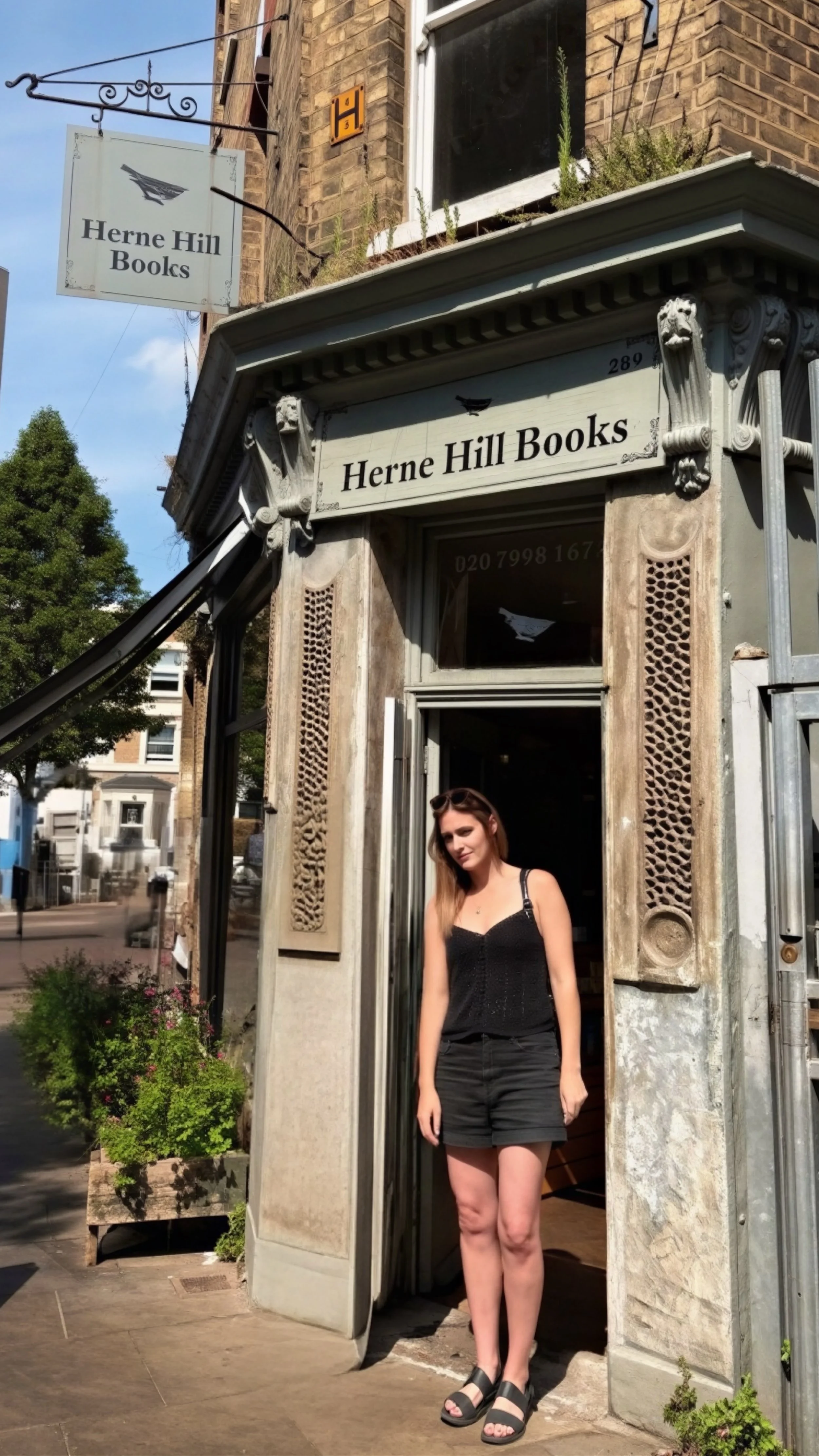
And on that note, at some point later today I'll start reading the book that I bought from Herne Hill Books over the weekend: Unsayable by Michael Cunningham.
—
