Influencer Marketing
⭐ UPDATE 2026: The Handbook of Fashion Law has been awarded IPKat Book of the Year in the IP category!

Regulatory and Legal Considerations Relating to Influencer Marketing from a UK Perspective
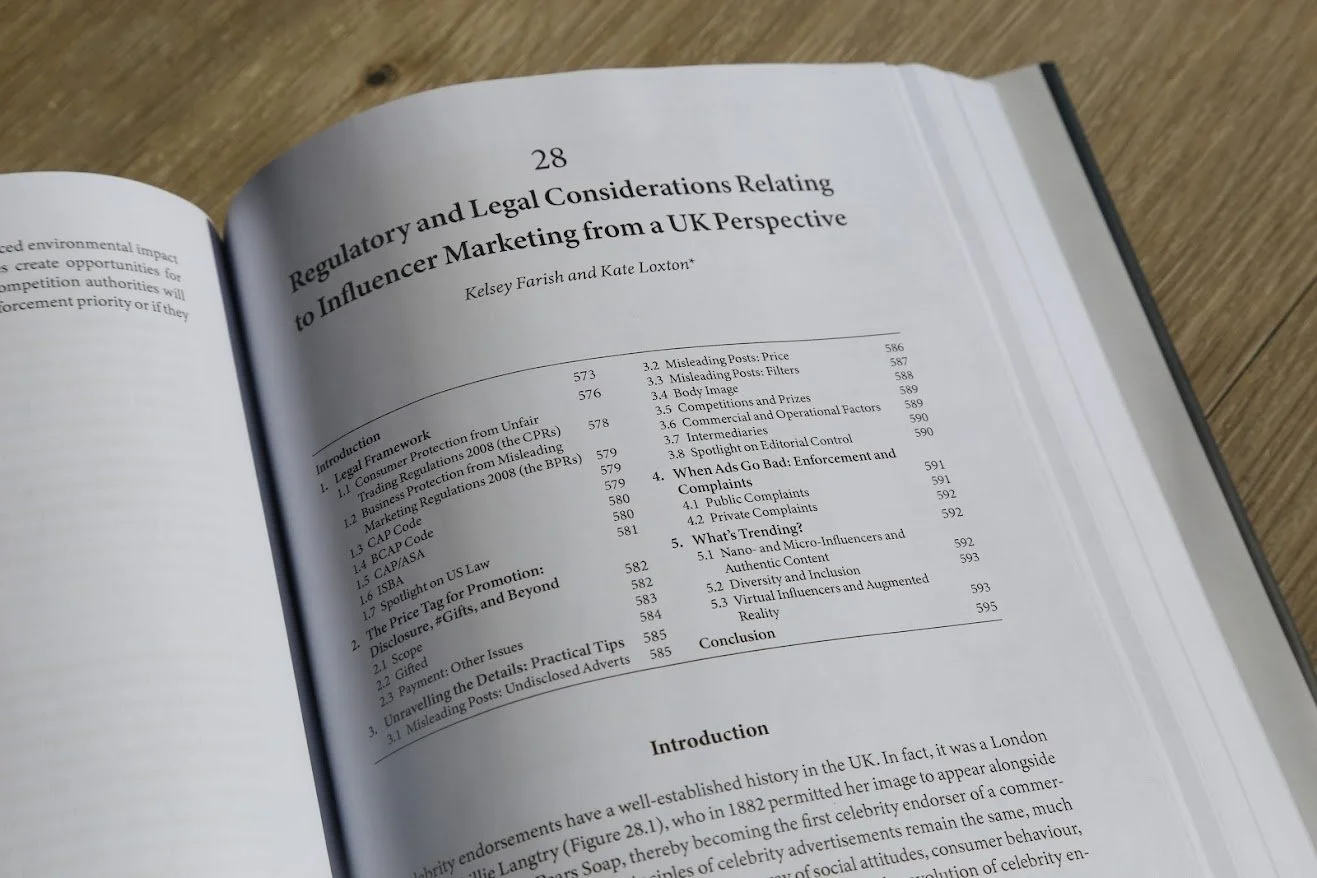
Together with Kate Loxton (Partner, DAC Beachcroft) I wrote the chapter on the rules and regulations covering influencers on social media. We brought together legal precedent with cultural analysis, offering practitioners and scholars a clear framework for understanding how image, influence, and intellectual property intersect.
Abstract
In 2012, the founder of a small fashion start-up in Birmingham, England, offered free samples of his company’s clothing to several bodybuilders. In exchange, he simply asked that the athletes wear the t-shirts on their respective fitness YouTube videos. Leveraging the power of social media personalities proved to be a successful promotional tactic and, before long, the company reached out to other athletes and fitness personalities on different platforms, including Instagram.
As of spring 2023, that business—Gymshark—is valued at nearly £1.17 billion (US$1.45 billion) and is credited as being one of the first companies to use what we now call ‘influencers’. In the decade since, an entire business model and regulatory regime has developed surrounding the use of social media celebrities for promotional advertising purposes.
This chapter explores how consumer engagement must be balanced with consumer protection, and offers an insight into the applicable legal and regulatory framework of influencer marketing in the UK, with a short note of the comparable regime in the US. In addition to commentary on statutes and industry codes, the chapter considers important practicalities that brands and influencers alike should be aware of when engaging in influencer marketing.
These include learnings from recent regulatory decisions on misleading advertising, as well as the use of digitally-enhanced images and beauty filters. Following a brief discussion of recent technological and social trends, the chapter concludes with key takeaways for brands and influencers, and the legal practitioners who advise them.
